
Office reinstatement cost is shaped by the condition a tenant must return, the building’s rules and the technical work hidden behind visible finishes. A credible budget starts with the lease and a survey, then makes uncertainty visible before a contractor is appointed.
In This Guide
01
Start with the return condition
The lease, approved fit-out records and landlord instructions set the commercial starting point. They determine whether the office must be returned to a base-build condition, whether selected items may remain and how final acceptance is obtained. A cost plan built before those documents are reviewed is only an early allowance, however confident the headline rate may sound.
Translate the obligation into a marked-up plan. Record partitions, ceilings, doors, joinery, pantry equipment, flooring, cabling, access control, signage and altered services. Separate items that are known to be removed from items that need landlord confirmation. This protects the tenant from assuming that a visible feature is the whole scope.
Ask the building manager to confirm access hours, loading arrangements, deposits, submission requirements, protection, waste routes and inspection notice periods. These are real delivery costs, not administrative footnotes. In Central, Admiralty and Quarry Bay Grade A buildings, restricted work windows can materially alter sequencing and preliminaries.
| Cost layer | Question to settle |
|---|---|
| Return condition | What does the lease or landlord require? |
| Removal | Which tenant alterations and specialist systems leave? |
| Making good | Which floors, ceilings, walls and services must be restored? |
| Building process | What access, protection, deposits and submissions apply? |
| Handover | Which tests, records and inspection items are required? |
02
See the work behind the visible office
The visible removal of a meeting room can trigger work to sprinklers, smoke detection, air distribution, lighting, containment, power and ceiling finishes. Removing a reception desk can expose floor and wall repairs. A cost plan should state those interfaces explicitly, because they are often where two quotations diverge.
Commission a survey before treating a proposal as fixed. Photographs, original drawings and a site walk help distinguish a confirmed item from an assumption. Where a concealed condition cannot be inspected safely, price a transparent allowance and explain its trigger. That is more useful than a low number that assumes the issue away.
For occupied premises, include temporary segregation, protection, information-security controls and after-hours working. These costs can be justified when they protect business continuity. They should be shown separately so the client can decide whether to phase work, move teams or accept a shorter possession window.

03
Read quotations as scope documents
A reinstatement quotation is not comparable merely because it has the same total. Review inclusions, exclusions, quantities, access assumptions, specialist trades, disposal, temporary works, cleaning, testing, documentation and defects support. Ask every bidder to respond to the same scope revision and explain where their answer differs.
Pay particular attention to provisional sums. A provisional item is not necessarily a problem; it is a signal that a decision or survey remains outstanding. The quotation should say what will convert it to a confirmed sum, who owns the decision and whether the programme could be affected.
An exclusion needs an owner. If data removal, fire-service alteration, landlord supervision or repair to an existing condition is not included, identify who will procure it and how it connects to the handover date. This prevents a seemingly efficient proposal from leaving essential work without a delivery route.
| Ask | Why it matters |
|---|---|
| What is included in making good? | Strip-out alone rarely produces an inspection-ready floor. |
| Which services are assumed? | Fire, HVAC, electrical and data interfaces can alter the cost. |
| What is provisional? | Allows the client to plan decisions and contingency. |
| What is excluded? | Assigns an owner before the programme is committed. |
| What evidence is supplied? | Supports inspection, deposits and facilities records. |
04
Build cost and programme together
The least expensive sequence on paper may not be the least expensive route to vacant possession. A programme should work backwards from final inspection and include submissions, approvals, access booking, isolation, specialist work, removal, making good, testing, cleaning and defects closure.
Longer preliminaries can be sensible where access is limited, a building requires evening works or a specialist appointment has a fixed lead time. Compare the programme narrative alongside the price: it should name dependencies, decision dates and the contingency route if an approval or inspection moves.
If there is a fixed lease end, protect the milestone rather than simply compressing site work. Standardise a non-critical finish, approve a service decision earlier or plan a phased exit. A contractor who can explain those trade-offs gives the client control over cost rather than a promise that cannot be governed.
Budget Gates
Six decisions before a reinstatement budget becomes a commitment
- 01Obligation
Confirm the return condition.
- 02Survey
Record alterations and interfaces.
- 03Scope
Define removal and making good.
- 04Compare
Test inclusions and allowances.
- 05Sequence
Plan access, works and testing.
- 06Inspect
Close records and defects.
05
Keep contingency purposeful
A contingency is not a spare pot for an undefined brief. It is a controlled allowance for risks the team can name, such as a concealed condition, a landlord instruction still awaiting confirmation or a technical interface that requires specialist inspection. Record each risk, its owner, its potential effect and the decision that will retire it.
The Buildings Department advises that alteration and addition works may require professional advice and formal approval or consent, depending on the work. For a tenant reinstatement, that is a reminder to identify the correct statutory and building-management route early, rather than assuming compliance can be resolved after a removal package has started.
Update the cost plan as risks are resolved. A clear change register should show the issue, options, recommendation, price, programme consequence and approval. This gives finance and project leaders a reliable view of committed versus possible spend.
Further reading: Hong Kong Buildings Department, Alterations and Additions
06
Spend where handover requires it
The handover stage should be priced at the beginning, not treated as a final clean. Include inspections, relevant testing, certificates, marked-up records, photographs, waste documentation, keys or access returns and defects closure. The exact pack depends on the lease and scope, but the evidence route should be known before the final week.
The Fire Services Department notes that alteration to a fire service installation must be undertaken by an appropriate registered contractor and carries certification obligations. Where the reinstatement affects fixed fire-service equipment, make the specialist route and evidence visible in both the programme and quotation.
A final joint walk-through using the agreed scope is a small investment that can protect a deposit and a move-out date. It lets the team resolve marks, redundant items and incomplete making good while the responsible trade is still available.
Further reading: Hong Kong Fire Services Department, Fire Safety FAQ
07
Use the budget as a handover tool
The best reinstatement budget becomes a working control document. It links the lease obligation, survey, scope, quotation, risk register, programme and handover checklist. It allows a client to understand not only what the project may cost, but what must be decided to keep that cost credible.
MJPM can coordinate reinstatement scope, building interfaces and handover from the same project perspective that shaped the original workplace. That continuity is valuable when a floor in Wan Chai, Central or Kowloon Bay needs to be returned without losing sight of programme, evidence and commercial responsibility.
Before appointment, ask the proposed delivery partner to walk through the scope, risks and final inspection route in plain language. A useful answer should make the next decision clearer, not make uncertainty disappear from the paperwork.
Practical
A practical reinstatement cost review
Before approving a budget, put the lease, approved drawings, landlord instructions and survey photographs in front of the same decision group. This gives finance, facilities and the project lead a shared basis for challenging a quotation. It also prevents an old recollection of the original fit-out from becoming an untested cost assumption.
Ask the contractor to identify the three items most likely to move the budget and the action that will resolve each one. The answer may be a landlord confirmation, a specialist survey, an access booking or a product decision. Record the owner and date beside each item. This converts a contingency conversation into an achievable set of decisions.
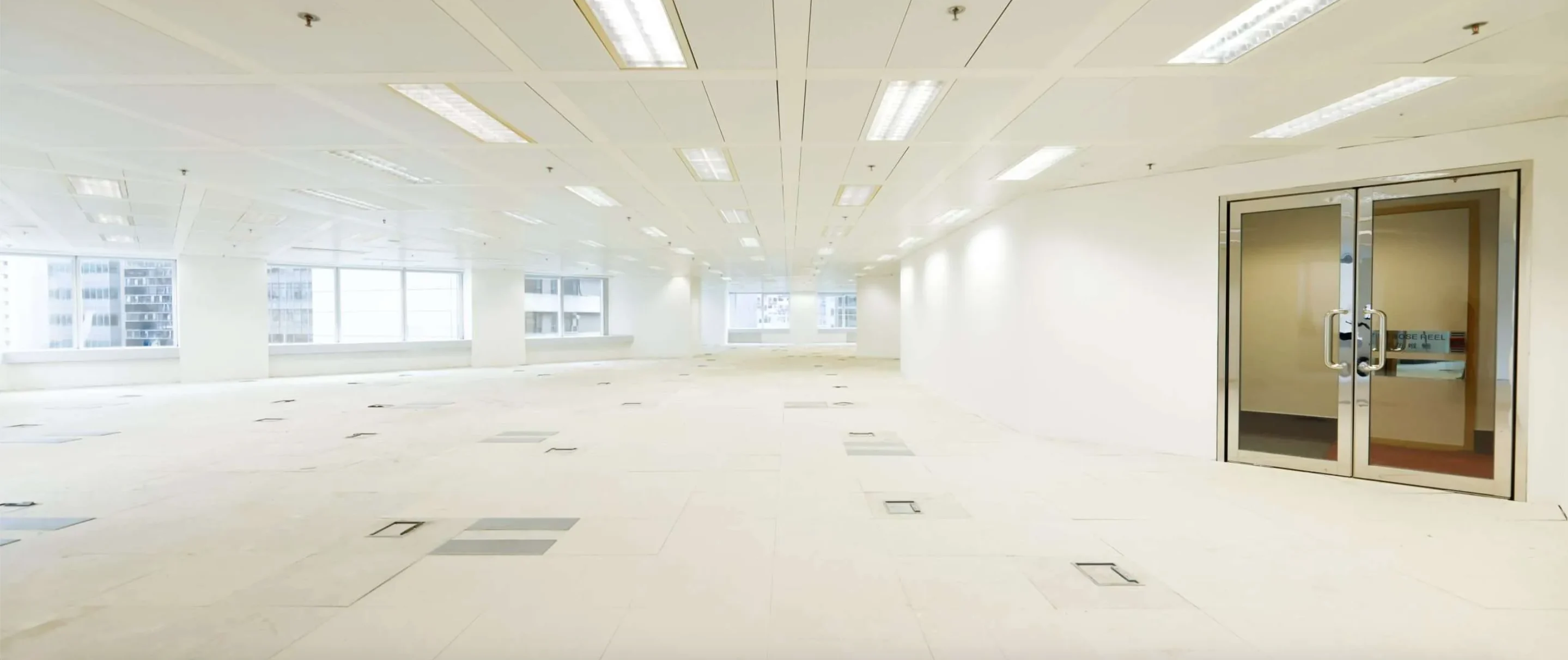
Finally, compare the planned completion date with the inspection date, not only with the last day of physical work. Allow time to review making good, receive any required records and close defects. An office can look empty and still not be ready for acceptance.
Keep the final approval meeting practical. Confirm who can approve a variation, who can accept an inspection item and who will retain the handover records after the office is vacated. A reinstatement budget is most useful when it gives these people one shared view of the remaining decisions, rather than creating a separate commercial conversation for every late issue.
| Bring | Decide |
|---|---|
| Lease and landlord correspondence | Return condition and inspection route |
| Survey and marked-up plan | Known work and unresolved interfaces |
| Comparable quotation schedule | Inclusions, allowances and exclusions |
| Programme | Approval, access and testing milestones |
| Risk register | Contingency owner and resolution date |